
Recognize the Instruments in Chautauqua County Deed Records
The Chautauqua County Register of Deeds records qualifying instruments and keeps the ownership indexes for land across the county. A deed names the parties, carries the legal description, and holds the conveyance language that controls the transfer. The index only points the way. Read the full instrument itself.
| Deed Type | What It Does | Common Use |
|---|---|---|
| Warranty deed | Conveys the stated interest with covenants written in the document | Conventional arm's-length transfer |
| Quitclaim deed | Conveys whatever interest the grantor has, without promising its extent | Corrective or intra-owner transfer |
| Trustee or executor deed | Shows a fiduciary acting under stated authority | Trust or estate administration |
| Sheriff or tax-related deed | Reflects a court or statutory sale process | Foreclosure or delinquent-tax chain |
| Plat or dedication | Creates recorded lots, blocks, additions, streets or dedications | Subdivision and city-addition research |
Not every recorded document is a deed. Mortgages, liens, oil and gas leases, easements, releases, assignments, and powers of attorney each do different legal work. Chautauqua County names these instrument families distinctly, so a thorough deed-record search covers both conveyances and the papers that burden, explain, or release an interest.
Use the Chautauqua Register When No Web Index Appears
Chautauqua County publishes no online grantor-grantee form, deed-image portal, stated coverage cutoff, or fee sheet. The dependable route is Register Laura C. Beeson and Deputy Melody Rodriguez at 215 N Chautauqua Street, Sedan, KS 67361, telephone 620-725-5830, or ccregdeeds@hotmail.com. Include name variants in your request. State whether the party acted as grantor or grantee. Add approximate dates, instrument type, legal description, and any book/page or instrument number already known.
| Index detail to request | Why it matters | Verified fallback |
|---|---|---|
| Grantor and grantee variants | Separates transfer direction and spelling forms | Counter, phone, email, or precise KORA request |
| Instrument category | Narrows deeds, liens, leases, releases, plats and powers | Name the category in the request |
| Date range | Reduces false same-name matches | Give an approximate range, then widen |
| Book/page or instrument number | Identifies the recorded document | Ask staff to return the reference before ordering |
| Image or certification | Determines copy form and legal use | Confirm page count, charge, payment and delivery |
The official Register page confirms the office's countywide indexing role and the range of instruments it records.
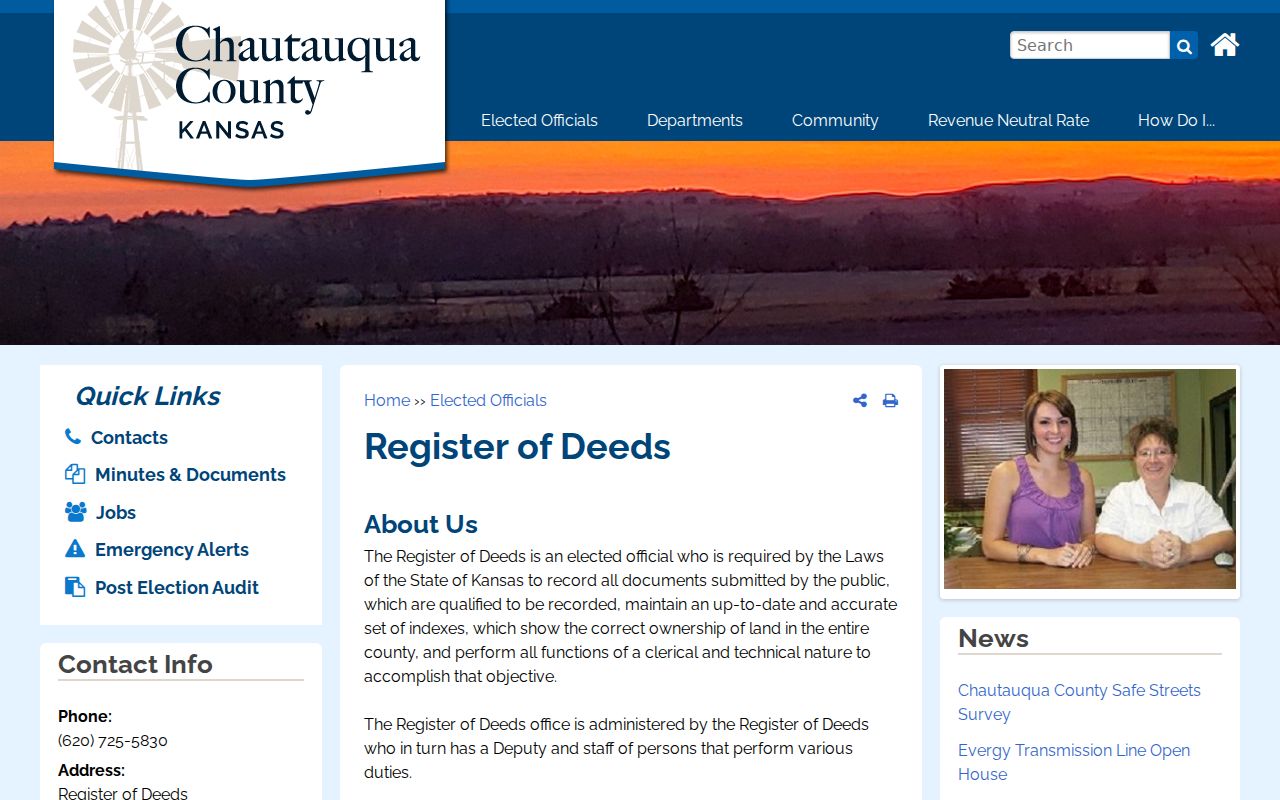
Start narrow. Ask for one instrument first, then widen the request once the returned index reference pins down the correct chain.
Walk Chautauqua County's Grantor-Grantee Chain
The ownership index runs on party names. That means a current address must first be converted into a legal description and the owner of record's current name before any backward chain can begin. Keep a working table as you go. Log the recording date, grantor, grantee, deed type, book/page or instrument number, and the exact legal description for every step.
- Ask the Appraiser for the parcel and legal description, then identify the apparent current owner.
- Locate that party as grantee in the newest acquisition deed and read the grantor.
- Search that grantor as grantee in the earlier acquisition, comparing the same land description.
- Repeat while checking name changes, entities, estates, corrective deeds and marginal references.
- When the modern index ends, continue in deed books, plat atlases, court files and archival aids.
- Grantor
- The party conveying the stated interest.
- Grantee
- The party receiving the stated interest.
- Chain of title
- The ordered sequence of instruments affecting the same land.
- Book/page or instrument number
- The recorder's retrieval reference; ask which system applies to the document.
Chautauqua County Deed Records Include More
Each conveyance opens more doors. Search mortgages and security instruments afterward. Assignments, releases and satisfactions come next. Then look for judgment and tax liens, mechanic's liens, easements, rights-of-way, leases, and lease assignments and releases. Chautauqua County's recorded holdings include oil and gas leases. That locally important category is one no tax classification alone can establish.
Court dockets and land records answer different questions. A foreclosure may generate a lis pendens, judgment, sheriff's instrument, or later deed. A recorded release is the event that clears an indexed lien. Use Kansas CaseSearch for public docket leads. For reliance, get the official court file. A certified copy from the 14th Judicial District clerk works too.
Early Chautauqua Deeds Cross a County-Seat Story
The Kansas Historical Society dates the county's establishment and organization to 1875. Its accounts describe a county-seat contest. Elk Falls held the records at first. Sedan later won the permanent seat. Sedan's first courthouse followed in 1877, and the present courthouse dates to 1917–18. Early deed records and administrative papers may sit in either town's legacy holdings. Ask about provenance rather than assuming where they live.
The KSHS property-ownership map collection lists Chautauqua County plat atlases for 1903 and 1921. Those maps can bridge an old owner name, township, and section into deed-book research. Treat them as historical snapshots, not present title evidence.
The KSHS collection page displays the ownership-map holdings used for that bridge.
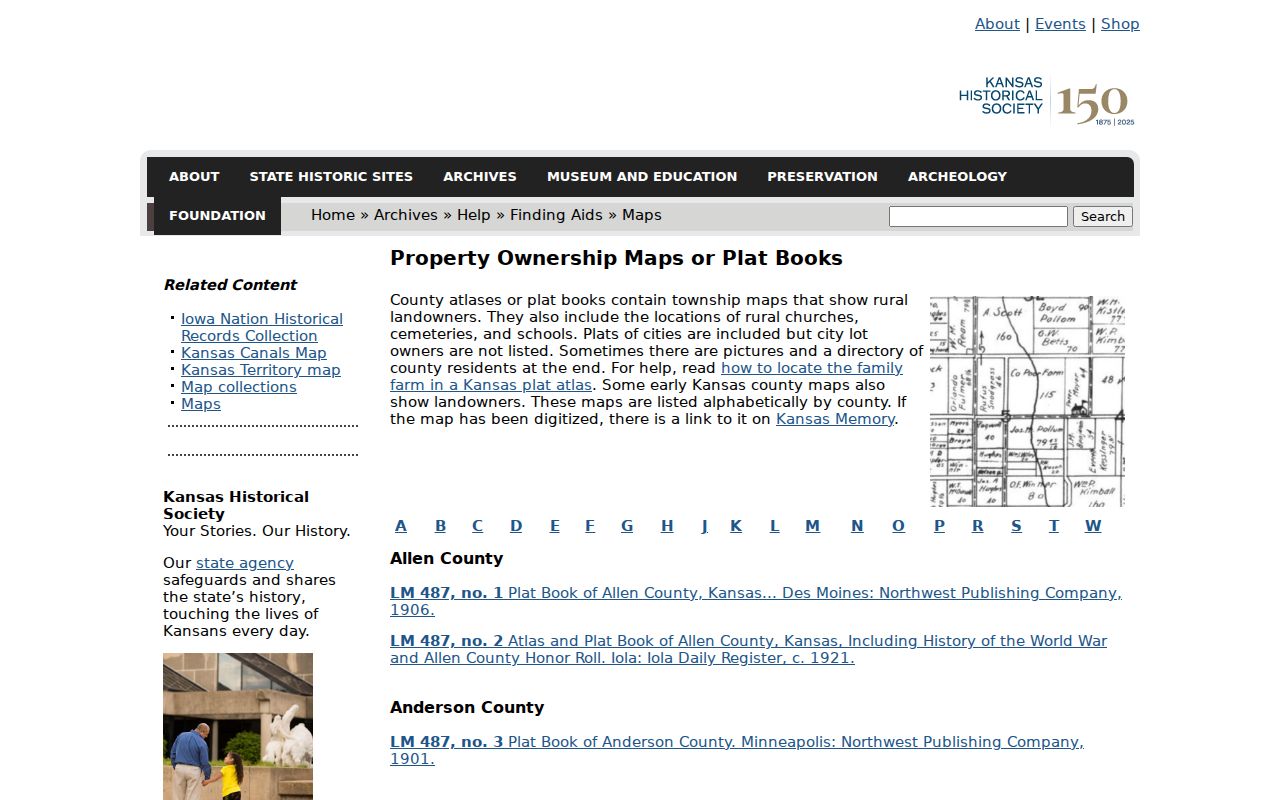
Pair an atlas name with the Register's index and save the deed citation returned for every ownership step.
When Probate Changes the Chautauqua Deed Trail
A death record or obituary does not transfer land. For an estate, search the probate case for authority first. Then search the Register for the operative deed, affidavit, court order, or survivorship instrument. Treat the decedent, estate, executor, administrator, trustee, and heirs as leads only. The controlling recorded or court document supplies the legally relevant action.
This approach helps most when one deed-chain link looks nothing like a normal sale. Court records may explain the authority behind it. The post-death instrument then restores continuity in the land index. Restricted vital certificates follow separate eligibility rules. They are no substitute for a public deed search.
Request a Chautauqua County Deed Copy with Precision
Start by asking the Register to confirm the instrument reference and its page count. Say plainly whether you want an informational copy or a certified copy. Ask for the current total and the accepted payment method, then choose email, mail, or pickup for delivery. Kansas sets some recording fees under K.S.A. 28-115. The county publishes no current Chautauqua fee sheet, so do not work out a copy charge from that statute on your own.
When a routine letter does not settle the matter, turn to the county KORA policy. Give your name and contact details. Describe the exact indexed instrument, ask for an estimate, and address the request to the Register rather than the County Clerk. The county can require payment in advance and bill for copying, delivery, and staff time.
Recorded, not guaranteed. Chautauqua County deed records show instruments accepted for recording; they do not resolve every unrecorded claim, defect, priority question, or title dispute.
Chautauqua County Deed Records Need Notices
Kansas Public Notices is the easiest way to catch deed-related filings early. The site lets you search by phrase, county, city, publication and date range. Pair an owner name and a parcel or address phrase with "tax sale," "foreclosure," or "quiet title." Add "lis pendens" and "redemption" too. The 2026 county tax-sale date was still unannounced. Confirm every date and redemption amount against the current notice before relying on it.
A notice or sale-list row is only a lead. It is not a title conclusion. Trace it through the Treasurer's accounting, the court petition and judgment, and any recorded conveyance or release. That reconciliation is what turns scattered public references into a defensible deed-record trail in Chautauqua County.
Log Chautauqua County Deed Records
Log every instrument you touch. Record the indexed party roles, exact names, recording date and deed type. Add the book/page or instrument number, the full legal description, and any references to assignments or releases. Note your search date. Also note whether the evidence came from an index entry, a plain or certified copy, a court file, an atlas or a newspaper, because that context keeps a historical lead from being mistaken for the recorded transfer in Chautauqua County deed records.
Conflicting descriptions happen, so transcribe both versions rather than quietly normalizing them. Small details separate neighbors. Lot-and-block numbers, section-township-range calls, exceptions, reservations and easements often distinguish parcels that share a similar postal address. Leave a gap visibly unresolved until the Register, a court file, probate authority or survey evidence supplies the connecting instrument.
Entity names need their own audit. Search an LLC under exact, former and surviving names. The same goes for corporations. The Kansas SOS database helps separate entities, but resident-agent information is not ownership. For trusts, search trustee and trust name variants. For joint tenancy or life estates, read the granting language plus any later death or release instruments instead of counting names in an index entry.
Chautauqua County posts no deed-fraud alert signup. Ask the Register whether a notification service now exists, and do not read the absence of a web form as proof that the county offers none.